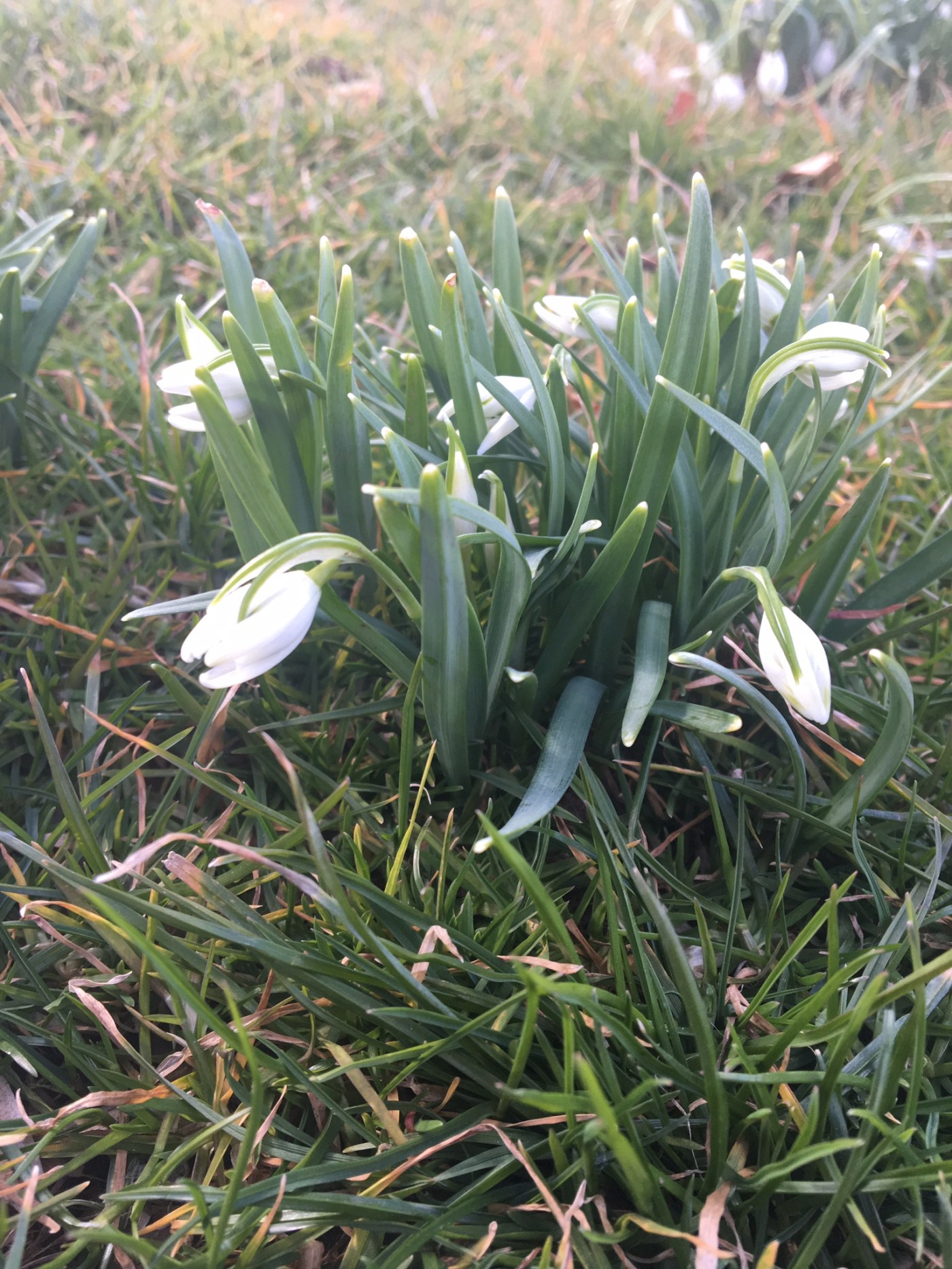
The flowers of late winter and early spring occupy places in our hearts well out of proportion to their size.” — Gertrude S. Wister.
Winter is a paradox- while the solstice may be the darkest day, it also represents the rebirth of the light. As the wheel of the year turns toward spring, even as it gets colder, the sun comes out earlier and stays longer. Hosts of plant life within the soil are biding their time in wait for the right conditions of heat and light and some will peak out their heads as early as January. The transition from winter to spring is a magical, liminal time when flowers bust through snow and every sign of renewed life can be taken as a harbinger of spring.
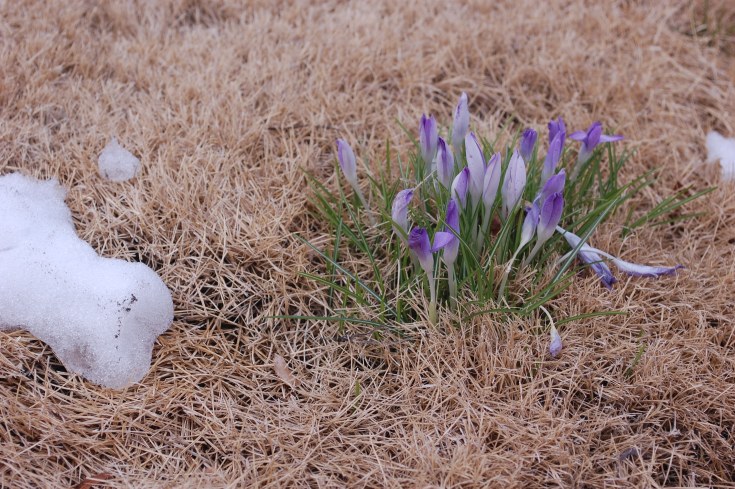
Frost kills many plants, but not all. When water within plants freezes, it breaks the cell wall and the plant cannot use its vascular system, becomes dehydrated, goes limp, and dies. Evergreens have evolved to withstand the frost up to a certain point – their leaves hold very little water and are protected by thick waxy coatings called a cuticle. Many of the ornamental early bloomers are geophytes, meaning they survive dormant underground using energy storage organs called bulbs, corms, tubers, and rhizome. While evergreens have become seasonal symbols of winter resilience, many of these geophytes have become synonymous with spring.
In addition to these intentionally planted flowers, the seeds of different wild plants are mixed in the soil and in the cracks of the pavement, some of which will sprout even in the snow, for they access the natural heat of the Earth’s soil and have evolved to endure cold temperatures (in addition to poor soil, drought, and being stepped on.)
These first flowers carry the names of mythology and have rich histories of their usage for food and as medicine. Beautiful arrangements can be made and dried flowers carried in amulets. Identification also brings its own pleasures, and early spring and late winter are a perfect time to begin learning because there are a limited number of species visible and so the scope can be narrowed.
What follows is a guide to identification and folklore of the first bloomers, the plants of this in-between time and the promise of fecundity to come. Ornamentals and weeds are presented separately, in the order that their shoots first appear.
Ornamentals
Every fall, gardeners can be seen planting some of the bulbs and corms of their favorite flowers, in a hopeful act that brings us some of the showiest beautiful blooms and colors of late winter and early spring.
Snow Drops (Galanthus)
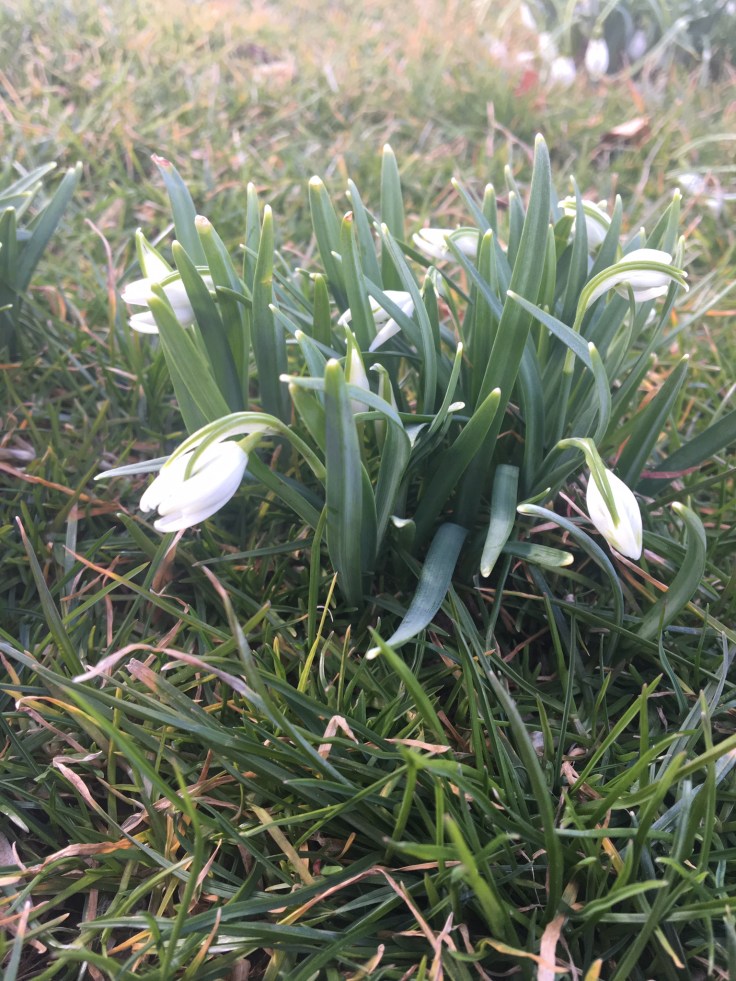
This flower’s greenish grey shoots can be seen piercing the soil as early as January, and because of this they are naturally seen as symbols of hope and resilience. Snowdrops are a genus of flowers called Galanthus, which contains 20 different species of bulbous perennials, native to Europe and the Middle East.
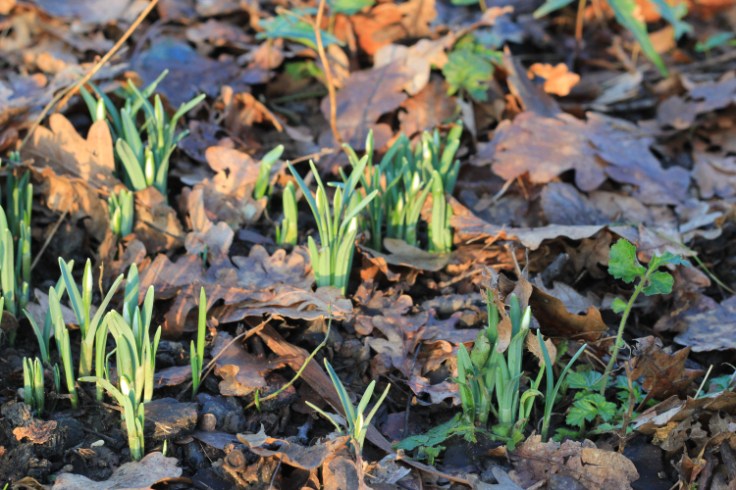
They are associated with the ancient Celtic festival Imbolc which marks the beginning of spring in the Irish calendar, and is also celebrated in many Neo-pagan traditions. Imbolc is a holiday to honor Brigid, goddess of spring, fertility, poetry, healing, wells, and smithcraft. In Ireland the tradition is also continued in honor of the syncretized Catholic St. Brighid.
Snowdrops are often depicted as being shy and modest, as their heads point downward. One fairytale tells of this flower’s origins with a story of three fairies who disobeyed the mythical Jack Frost’s orders to stay in fairyland for the winter. They were punished by the winter sprite by being transformed into flowers and forced to stay in the forest for three weeks every year.
It is speculated that snowdrops are the magical herb moly which cures Odysseus of Circe’s poisons in The Odyssey. Galanthus contain a chemical compound called galantine which counteracts certain poisons (and is also used to treat Alzheimer’s).
Crocus

Crocus are a genus of flowering plants in the Iris (Irinidaea) family and they are one of the first flowers to bloom after snowdrops. Crocus prefer cooler temperatures and shorter periods of light, with varieties that grow in early spring and others in autumn. Crocus means “yellow” and is named for the saffron spice that is collected from the autumn-blooming crocus’ pistils. Spring blooming crocus are associated with Aphrodite, Venus, and Mercury. Autumn blooming crocus were associated with the Goddess of Witchcraft Hecate and her “saffron-colored robes.” Crocus are native to the mediterranean, and like many flowers, they take their names from Greco-Roman mythology.
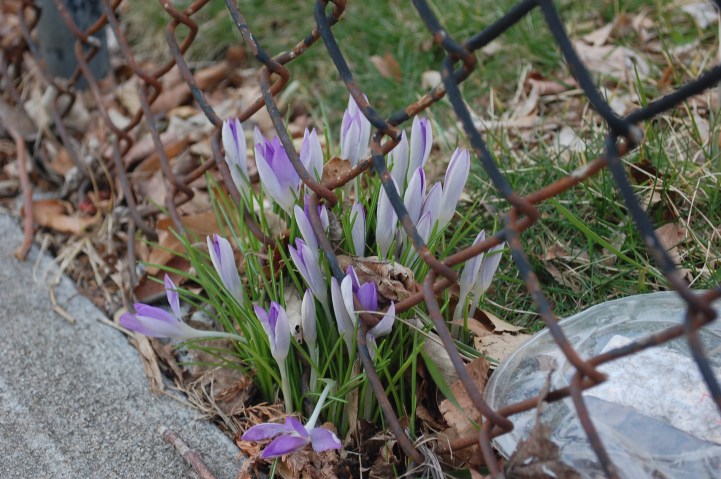
According to legend, Crocus was a youth who was in an unhappy love affair with a beautiful wood nymph named Smilax. The gods became frustrated by the couple, and so turned Smilax and Crocus into plants whose habitats are so different they could never be side by side again.
Like snowdrops, Crocus are associated with new beginning. They enhance visions and are used in spells of love and friendship, settling disputes and bringing peace.
Hyacinth (Hyacinthus)

Hyacinths are a small genus of sweet smelling bulbous flowers in the Asparagus family. Like Crocus, they are natives of the Mediterranean with varieties that bloom in both early spring and autumn. Hyacinths are named for the divine hero Hyakinthos from Greek mythology, who was a beautiful youth and lover of the god Apollo. For this reason, he has been considered by some to be a patron hero of homosexual men. Hyacikthos was accidently killed when he played discus with his lover and the flowers grew where his blood fell on the ground.

Here we find a recurring theme in the mythology of plant names- gods, mortals, and magical beings are transformed in death or as punishment into different plant species for their beauty and usefulness to humankind.
IHyacinths are used in love mixtures and to promote restful sleep. When carried as an amulet it is believed that hyacinths provide protection, help heal a broken heart, and sooth grief.
Daffodils (Narcissus)
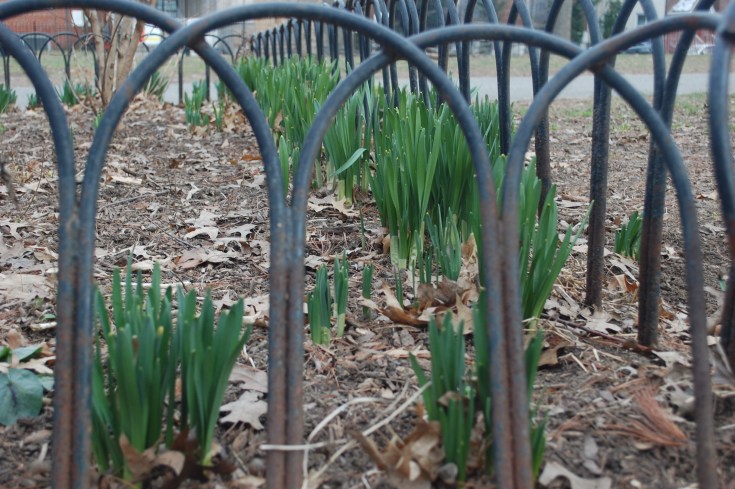
The bright yellow flowers of Daffodils look like trumpets heralding spring. European and North African natives, Daffodils are the Narcissus genus of plants, encompassing 50 different species of mostly spring-blooming perennials. It is said if you spot the first Narcissus of the season, you will have a prosperous year ahead of you.

They are named Narcissus for their downward pointing heads, which are said to resemble the downcast head of the famed mythical youth who was so beautiful he could not turn away from his reflection in a pond. In the Greek myth, the youth stared at his reflection until he died and was then transformed into the flower.
Daffodils held special value in Greco-Roman mythology. These were the flowers that were used to lore Persephone, the goddess of spring, to her capture by the god of the underworld Hades. She was so transfixed by the bright beauty of the flowers that she dug them up, and in doing so opened a hole to the underworld. Daffodils were also said to line the banks of the River Styx.
As symbols of spring, Daffodils represent fertility and are believed to bring love and luck. Bring a bouquet of daffodils into your home to attract abundance and place a vase in your room to increase your chances of conception.
Tulips

Tulips are members of the Lily Family that are native to Turkey and beloved the world over. They have an interesting history in the Netherlands, where a tulip-mania took over in the 17th century, as a result of a virus-induced variegated pattern breaking out among the flower heads, inspiring breeders and consumers. At one point, a single tulip bulb of a rare variety would sell for as much as the cost of a house!
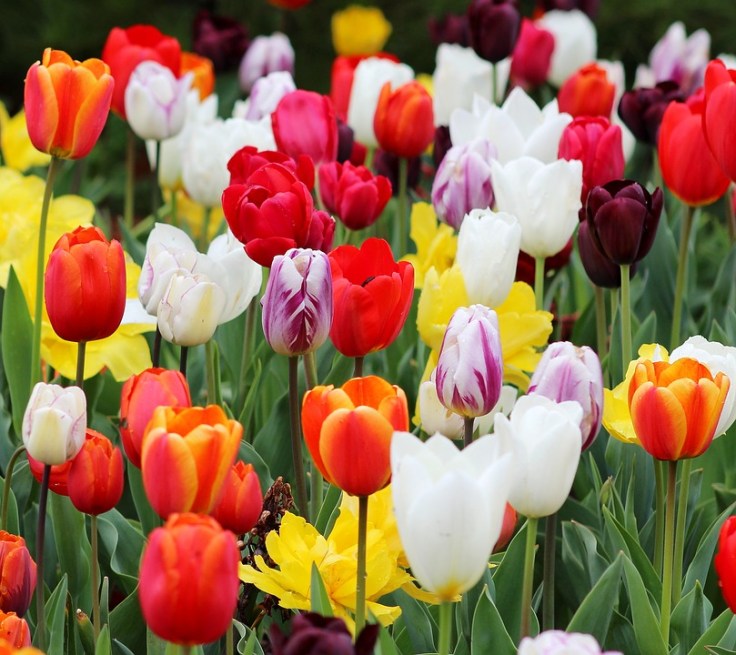
Tulips are worn as a safeguard against poverty and bad luck. The meaning associated with tulips also varies based on the color, and so are appropriate for all varieties of color magic.
Wild Plants
Invasives, spontaneous plants, pioneers, or weeds- whatever you call them, they are just as colorful and interesting as their more conventionally appreciated ornamental spring bloomers. Wild urban plants have evolved to withstand the harshest conditions. Many of these plants grew on cliffs and on top of rocks, thriving in the smallest spaces. Now they grow in cracks of the sidewalk, climbing up fences, and on skyscraper rooftops helping to absorb pollution and provide us with oxygen and beauty. They have rich histories of migration and of various uses for herbal medicines and for magic.
Dandelions (Taraxacum officinale)
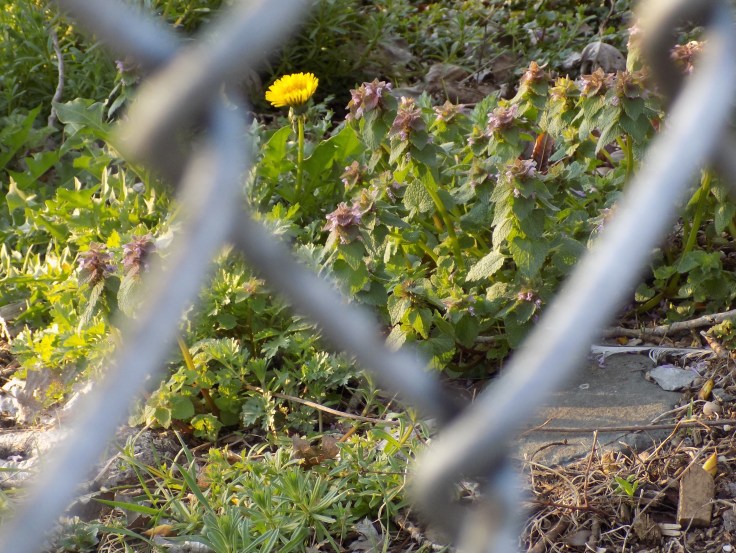
The circular rosettes of Dandelion shoots appear as early as February, and their cheerful yellow flower heads pop out beginning in early March. Dandelion are a genus of perennial plants in the Astereacea (Daisy) family that grow all over the world and are symbols of hardiness. They can grow in the smallest cracks in the concrete, and develop deep taproots that bust through rock and can burrow down up to three feet! They are a testament to slow and steady persistence.
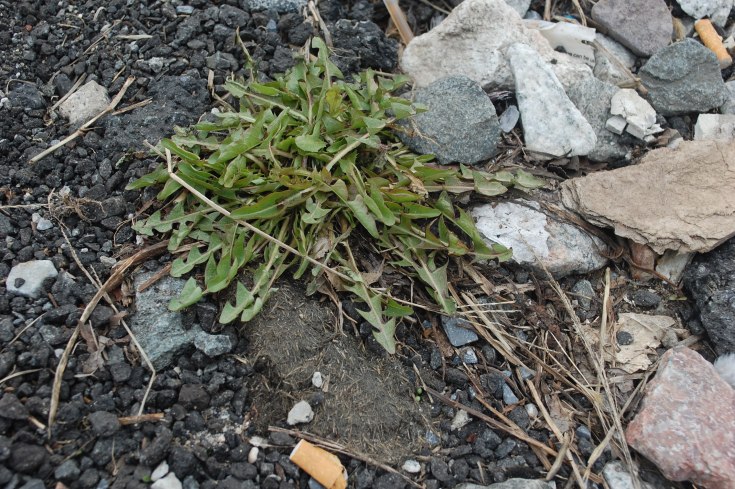
Sensitive to light , these flowers open and close during the day depending on the intensity of the sun. They’ll even close early in the day if rain is threatening. In part due to this phototropism, Dandelions have been associated with the sun since ancient times.
The common names of Dandelion tell us a bit about their folk history. “Dandelion” is taken from the french “dent de lion” which means tooth of the lion and refers to the shape of dandelion leaves. “Puffball” and “blowball” allude to the appearance of Dandelions famous puffy seedballs that develop after the yellow flowers. Blowing the seeds of dandelion is said to make your wishes come true. Some folklore holds that to attract a lover, face in the direction of your heart’s desire and if all the seeds are blown off in one shot, your love will come. If one seed is left attached, your lover is thinking of you.
In addition to being associated with the sun, lions, and wishes, dandelions are also powerful allies to our health. Their common names of “pissabed” and “piss en lit” point to their diuretic actions, helping the body pass urine and treating bladder and liver disorders. Dandelions also serve as a liver tonic, helping to strengthen the bodies ability to detoxify itself.
Shepherd’s Purse (Capsella bursa-pastoris)

Shepherd’s purse are hardy plants in the Brassicacea (cabbage) family that are vigorous growers with deep taproots that will grow in almost any disturbed soil. They grow throughout the planet in all temperate zones outside of the tropics. Their basal rosettes appear in late winter, resembling those of dandelion.
Shepherd’s Purse are named for their heart-shaped seed pods, which were said to resemble a sheepherders pouch. The folkname Mother’s Heart was also inspired by the shape of the seed pods, which are being continuously produced by the plant through all seasons.
Shepherd’s purse has been carried as an amulet to protect from bleeding. It’s seeds are in fact a powerful astringent, and are used to stop internal and external bleeding. The young leaves are gathered and eaten and are an excellent source of Vitamin C and K. Shepherd’s purse has also been shown to lower blood pressure and help to regulate menstruation. The Chinese have called this herb a “life preserving plant.”
Wild Violet (Viola sororia)

Viola Sororia is an herbaceous perennial native to North America. This low growing wildflower blooms from April to June. It is food for butterfly caterpillars, mourning doves, deer, mice, and people.
Violets have many common names including common violet, meadow violet, and hooded violets. They are also interestingly called “lesbian flower,” for their appearance in a poem by the great ancient Greek poet Sapho, in which she remembers a lost love –
If you forget me, think
of our gifts to Aphrodite
and all the loveliness that we shared
all the violet tiaras,
braided rosebuds, dill and
crocus twined around your young neck
Sapho, who hailed from the island of Lesbos, was a revered and feared woman whose beautiful poetry alludes to homoerotic love. Because of this, violets became symbols of lesbian romance. From 1910-1950, violets were given by women to the women they were pursuing.
Violets are also seen as symbols of purity and loyalty. Legend holds they bloomed when the Virgin Mary told the Angel Gabriel she would carry the Christ Child, saying “Behold, I am the handmaid of the Lord.” They were called “Our Lady’s Modesty,” due to the flowers being somewhat hidden in the heart shaped leaves.
The young leaves and flowers are both edible, and the flowers make a beautiful vinegar infusion. The Cherokee used violet to treat colds and coughs. Violets are also used for pain relief as they contain salicylic acid (the main ingredient in aspirin.)
Purple Dead Nettle (Lamium purpureum) and Henbit (Lamium amplexicaule)

Purple dead nettle and henbit are two plants that are sometimes confused for each other, for they are both early spring bloomers with purple flowers in the lamiaceae (mint) family. They grow to about 6 inches tall, and can be told apart by purple dead nettle’s hairy leaves and henbit’s deep red stem. Additionally, purple deadnettle have distinct petioles, whereas henbit is lacking petioles completely.
Purple Dead Nettle is native to Europe and Asia. Its leaves and growth habit are similar to stinging nettles, but lamium purpureum lacks the irritating hairs, and so acquired the name “dead nettle.”
Purple Dead nettle also goes by the folk name of “purple archangel” because the plants are blooming in Italy during the Feast of the Apparition on May 8th. The Catholic holiday honors the three appearances of the archangel St. Michael on Mount Gargano in sixth century.
These plants are also associated with cheerfulness and maidenhood, for they are colorful and vigorous growers that appear harbinging spring.
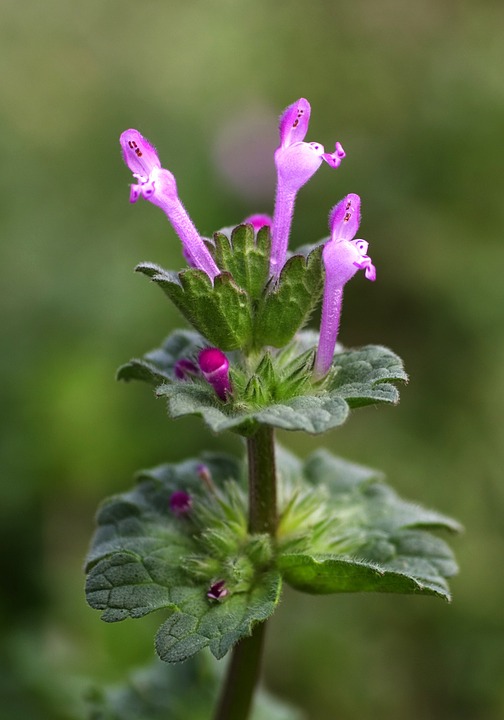
Henbit is native to North Africa, Europe, and Asia. It has heart-shaped leaves, which circle henbit bright red stem. Their long, tubelike purple flowers contain nectar beloved by hummingbirds. Chickens also have an affinity for these plants, which accounts for their folkname. Henbit is revered for its resiliency, and is well suited for magic associated with new beginnings and self love.
Both purple dead nettle and henbit have been used in European folk medicine to stop bleeding. The young spring shoots, rich in vitamins and minerals, are also edible. Lamium purpureum has been used to treat allergies.
Hope and Strength
All signs of spring are exciting for those coming out of the cold and dark of winter. – from the first ornamental shoot to the discrete and snow blooming wildflowers. The first signs of color and rebirth of life are reminders of the earth’s (and our own) power. Flamboyant flowers have taken on the names of gods, while the hidden weeds of the earth continue to feed and heal us, as they did our ancestors.
 Green Witch in the City
Leave a comment